Showing posts with label financial panic. Show all posts

Sunday, December 13, 2009

Financial "innovation"


I just finished reading Panic by Micheal Lewis, which is a collection of pieces that track financial panics starting with the 1987 stock market crash and leading all the way up through to today's housing bubble crisis.

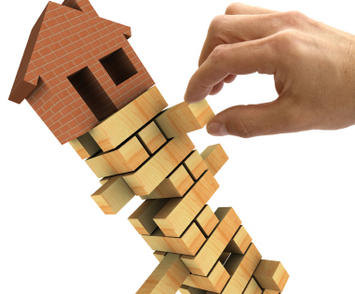
I'll have more to say on it later, but one pattern that seemed to repeat itself involves the dubious activity of "financial innovation"--i.e., Wall Street geniuses inventing some complex new financial instrument that supposedly squeezes more efficiency out of investments, creating greater returns--but in reality just does a good job of hiding risk, fueling a speculative bubble. Here is how the pattern plays out:

1. Some Wall Street geniuses invent some new financial instrument.

2. The instrument is so complex that no one can accurately and independently assess its level of risk--and so they take the Wall Street geniuses' word for it that the financial instrument really does offer better returns for the same amount of risk--that it is a true "innovation". I mean, they're geniuses, right? Look how much math they know!

3. As people buy into the financial instrument, its value increases, creating a cycle of self-validation: the higher it rises, the more solid the "evidence" that the geniuses' theory was right, which leads to more investors hopping on board, which raises the value of the financial instrument higher, and so on.

4. The financial instruments take off on what is in reality a speculative bubble, but what is thought to be the fruits of true financial innovation. Everyone gets richer and richer, and increases their leverage to get richer still ("leverage" means borrowing money to invest, so that you can make even more money. For example, suppose I knew that a horse was a sure thing in a race, but I only had $100. If the payout is 2x, the most I could gross would be $200. But if I borrowed $1 million from my rich uncle, I could gross $2 million, pay back the loan, and go home with a cool $1 million. Of course, if I bet on the wrong horse, then I'm horribly screwed: I go home with a whopping debt of $1 million owed to my uncle).

5. Eventually the risk hidden in the financial instrument (the risk that nobody could see because the financial instrument's complexity obscured it) rears its ugly head, and investors get wiped out. But everyone is now so overleveraged, that the demise of the financial instrument causes a domino effect, where everyone suddenly finds themselves in extreme debt (like the debt I owed to my uncle when my horse lost) that they cannot pay, and all their creditors are suddenly not going to get the money back that they lent out. Markets threaten to seize up as no one can raise money to pay off their debts, because there are no buyers, because everyone is selling at the same time. Eventually, Wall Street is bailed out and upbraided by Senators with spectacles slid half-way down their noses, new financial regulations are solemnly put into place, a few CEOs are fired, and Wall Street returns to business as usual.

6. Go to step 1.

Or at least, something like that. But the real point is that what is happening is a kind of manufactured uncertainty is introduced into the market, which becomes the vehicle for a classic speculative bubble--and when the bubble pops, it threatens to take everything down with it.

But this is particularly troubling, because the whole justification of the financial sector is that, supposedly, it does a better job of any system yet conceived of directing capital to the most useful and efficient places--which benefits us all, by giving the world cheaper goods, new inventions, and steady employment. Fair enough. But if Wall Street is spending its energies chasing mirages and throwing huge amounts of capital into one bubble after the next, then it's not doing a good job at all of allocating resources: it's just kind of arbitrarily sloshing them around. So it's like: what's the point?

(By the way, it's worth noting that Matt Yglesias has often pivoted off the inevitability of Wall Street hijinks to make an argument for more redistribution: basically, the grand deal is made that we'll allow Wall Street (and the investor class in general) to be sickeningly rich and we'll suffer its panics when they come and we'll bail it out if need be, but in return, we get to levy high taxes on the rich that pay for universal health care, child care, and education. I think it's pretty reasonable.)

(Photo lifted from this article, which it turns out is definitely worth reading if you found this post at all interesting.)

Tuesday, July 14, 2009

The Sanford Panic


Something that struck me about the recent turn of events concerning Mark Sanford is how familiar the pattern was of his collapsing political support: it worked just like a bank run.

And this makes sense: just like with a bank, confidence in a politician is predicated on the belief that other people have confidence in that politician. So a sudden shock of lost confidence can trigger a self-sustaining feedback loop of further lost confidence: the more confidence is lost, the more likely it is that everyone will ultimately abandon Sanford, a realization that causes even more lost confidence, and so on.

But what is interesting about this case in particular is when the panic started, because it didn't start when the affair was unveiled--even despite his bizarre multi-day disappearance. Indeed, after Sanford had duly confessed in a televised speech and promised to atone for his sins, it appeared likely that his supporters would stand by him, and that he would remain in office. And when Michael Jackson's death took over the news cycle, conventional wisdom was that Sanford had lucked out and would definitely survive the ordeal.

The calls for his resignation eventually came--but only after his public confession/apology, as a result of an extended and very earnest interview with the AP, in which he made all sorts of heart-rending admissions and news-worthy observations that strayed from the usual prepackaged platitudes. From Politico:
“Two days ago there were very few people calling for his resignation,” said Rep. Bob Inglis (R-S.C.), who has not called for Sanford’s resignation. “It came out of that interview.”
And:
Another top Republican in the state said of the governor: “His support has collapsed.”
So what happened here? Well, I think it's not stretching things to put it this way: at a critical juncture, Sanford--with his odd behavior--spooked the investors. In American politics there are certain norms and rituals--certain scripts--which politicians typically conform to as a sort of kabuki. And while such rituals, in cases like these, inevitably lead to the most painfully inauthentic, glib expressions of human remorse, they also reassure supporters by signaling that they will be embarking on the same scripted set of steps that countless prior adulterous politicians have taken to successfully recover from scandal. It's the predictability of what will unfold that props up supporter confidence during this critical period.

When Sanford went "off-script", this sense of predictability vanished, and with it, his political support.

(Photo by Mike Licht, NotionsCapital.com)

Thursday, November 20, 2008

Hold your breath

Apparently we're once again moving to the brink of disaster in the credit markets. Krugman tells us not to worry about the plummeting stock market:

Panic about the credit markets instead. Interest rate on 3-month Treasuries at 0.02%; interest rate on high-yield (junk) bonds over 20%.

This is an economic emergency.
If my understanding is correct, the spread between those two numbers indicates how scared investors are that borrowers in the private market (including banks, companies, and you and me) will default. Treasuries are loans to the federal government, and are considered virtually 100% safe (since the government can always tax, borrow, or print money to repay a debt, and will basically never default). Since everyone is "flocking to safety" and loaning to the federal government, the federal government can demand to borrow at very low interest rates and still find a lender. In fact, the federal government can now borrow $100 today and only have to repay a total of $100.02 three months from now!

On the flipside, "junk" bonds--which are considered higher risks for default, and which can only find lenders by offering to borrow at very high interest rates--their interest rates are shooting through the roof. This is because nobody wants to invest in the private markets, because they are afraid that private borrowers will default.

And so a wide gap between those two interest rates indicates people are getting the hell out of the private markets and essentially stuffing their cash under the government's mattress.

Incidentally, while this is all bad news, it also illustrates why federal deficit spending is required in these situations. The government can borrow money for free; now is the time for the government to borrow lots of it and get it spent in the economy, so as to make up for the decrease in consumer spending and keep lots of businesses alive (thus preserving jobs). And of course, this should be done in a constructive way, with spending on things like increased unemployment insurance, infrastructure, financial aid to the states, and tax relief for everyone.

Anyone who talks about balanced budgets right now just doesn't know what they're talking about. Obama needs to run, like, a 500 billion dollar deficit next year.

Friday, September 26, 2008

Uh oh

Today when I left work, everything looked on track for the bailout. All sides had agreed on the principle points: $700 billion, government buys equity in the firms, oversight of the federal purchase of assets, relief for Main Street, limits on executive compensation. The consensus was that a bill would be signed by the weekend.

But after a thoroughly enjoyable evening dining with Marian and the great Harinder Chahal, I come back home to find this NYT headline staring me in the face:

Talks Implode During Day of Chaos; Fate of Bailout Plan Remains Unresolved


When the economy is on the verge of utter, Depression-level collapse, the last thing you want is some salient public event to panic everyone into thinking that everyone else is panicked, thus causing everyone to pull their money out of the system. It's a collective action problem. So words like "chaos" and "-plode" in the morning headlines do not bode particularly well.

Moreover, it is not a good sign that the level-headed authorities that are supposedly piloting us through these troubled waters are doing things like entreating House Speakers on bended knee and pleading with them not to blow things up:

In the Roosevelt Room after the session, the Treasury secretary, Henry M. Paulson Jr., literally bent down on one knee as he pleaded with Nancy Pelosi, the House Speaker, not to “blow it up” by withdrawing her party’s support for the package over what Ms. Pelosi derided as a Republican betrayal.

“I didn’t know you were Catholic,” Ms. Pelosi said, a wry reference to Mr. Paulson’s kneeling, according to someone who observed the exchange. She went on: “It’s not me blowing this up, it’s the Republicans.”

Mr. Paulson sighed. “I know. I know.”

Before tonight, I thought there was an air of cautious optimism that some kind of package--however suboptimal--would be agreed upon that would stave off financial collapse. But it seems like that has been replaced with something far more ugly, visceral, and frightening: panic. It's palpable. It's in the language people are using. "Madness", says Krugman. "This sucker could go down", says Bush. Bailout plans are in "disarray", says WSJ. And Drudge? "BREAKDOWN" (although, it should be noted that there are no siren animated GIFs--close shave there). And on top of all this, Washington Mutual failed and was bought out by JPMorgan.

Of course, all this is just one layman's gloss of the whole thing. Hopefully I'm mildly embarrassed tomorrow and nothing extraordinary happens. But I have the sinking feeling that tomorrow will soon have the word "Black" attached to the front of it.

PS: Apparently, the key figure to keep an eye on is not the stock market but the so-called "TED spread". This measures the difference between the interest on 3-month Treasury bills (T-bills) and the 3-month LIBOR. Let's see if I understand this well enough to explain it coherently:

A T-bill is a security that the federal government issues as a way of borrowing money from the general public: you pay, say, $1000 for the T-bill, and the government agrees to pay you back $1100 in three months. T-bills are considered one of the safest possible investments, because they are backed by the federal government--the government, of course, being the only player in town capable of raising funds by coercive force (taxes) or, if it comes down to it, by simply printing more money. Interestingly, the interest rate of the T-bills is determined by a regularly held auction, so that it is constantly fluctuating depending on how much demand there is for people to lend money to the government (or, put another way, how much demand there is for T-bills). If there are lots of people who want to lend to the government, then the government can command a lower interest rate for itself, because lenders will be undercutting each other at the auction with lower and lower interest rate offers. If there aren't a lot of people who want to lend to the government, it will be forced to borrow at a higher interest rate. If investors don't have confidence in private institutions, then they tend to flock to the safety of federally-backed T-bills, driving down the T-bill interest rate.

Meanwhile, in just the same way that the government borrows money from the general public (including big banks), big banks borrow from other big banks. The LIBOR is the average interest rate at which this interbank borrowing takes place.

The upshot of all this is that, when times are good and investors are very confident in the private banking system, then banks will consider loaning to other banks to be as safe a bet as loaning to the federal government--and so the interest rates will be about the same for lending to each, and the difference between the rates (the TED spread) will be small. However, if there is little confidence that banks can repay their loans, then no one will want to risk lending them money unless they get a juicy interest rate in return (e.g., I'm not gonna take the risk of lending First Shitty Bank International a billion dollars unless there's a significant upside in it for me--like, say, that First Shitty will borrow from me at high interest rate). And so the average rate at which banks lend to each other--the LIBOR--will be higher.

To put it all together: if there's high confidence that private banks can repay their loans, then these banks can demand interest rates as low as what the government demands. However, when confidence in the banks' ability to repay is at an ebb, borrowing banks cannot command a good interest rate from lending banks, and so the average interest rate of interbank loans (LIBOR) rises. Moreover, since investors are flocking to the federal government (since it's too risky to lend to private banks), the interest rate of T-bills goes down. The rising LIBOR and falling T-bill rate means a higher TED spread.

The TED spread, then, reflects the amount of credit that is available: a high TED spread means there is not that much credit around (i.e., not much money available that can be borrowed), and a low TED spread means that credit is plentiful (i.e., it is easy to get an affordable loan).

The big danger is that credit will "freeze up"--become unavailable--and that all of the parts of the economy that rely on there being credit--people being able to buy houses and cars, businesses being able to stock inventory and keep operations going during a revenue slump, financial institutions being able to pay investors who unexpectedly want their money back--will simply stop. And this will cause a negative feedback loop of investors pulling their money out of the system (i.e., liquidating their assets--i.e., selling their assets--i.e., turning their assets into cash), leading to a flooding of the market with assets, which will cause the value of the assets to plummet (too much supply, not enough demand), which will cause the financial institutions--whose net worth is tied up in the assets--to have even more losses, which will make confidence in these institutions' ability to repay their loans sink even lower, which will make interest rates even higher (and thus, credit even scarcer), and so on, until we wake up and Depression II is upon us, and a huge chunk of the economy has gone out of business, and unemployment is at 25%.

Phew! So, I'm not sure if all that is correct. It is my best understanding of the whole situation, and I am, I hasten to remind you, a layperson when it comes to this stuff. But I think the basics are there, and in any case, I recommend keeping a tab on Paul Krugman's blog tomorrow, as he will no doubt have some kind of analysis of that all-important TED spread figure.

Oh, and by the way: here is what the TED spread actually looks like. We're already way up in the 3% "credit hell" zone--let's see what tomorrow brings.